
秘密
Chinese team develops intelligent vision sensor that turns light signals into AI-ready tokens, reducing use of energy_我的网站

一 | 今日(8月19日),《诡秘之主》正式开启公测客户端预下载,角色预创同步开放,游戏将于8月21日上午10点开启公测。

二 |
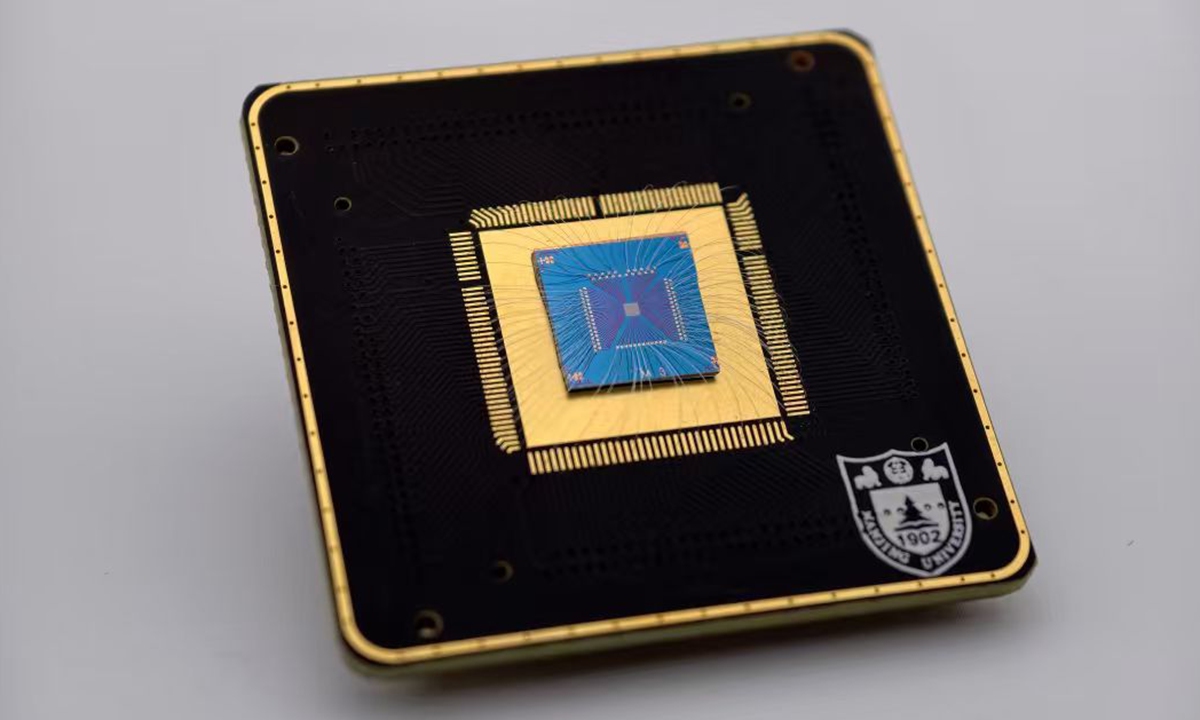
A Chinese research team from Nanjing University has developed a new ultra-low-power intelligent vision sensor chip, dubbed "LightTok," that can convert light signals into tokens within the sensor, significantly reducing the high energy consumption caused by frequent transfers of massive amounts of redundant data, the principal investigator told the Global Times.
According to a release from the Institute of Brain-Inspired Intelligence of Nanjing University, tokens generated by the LightTok chip can be directly fed into a Transformer encoder for image recognition.
"Our design idea was to move token generation onto the sensor itself, allowing the chip to directly produce tokens that AI models can process once light reaches the sensor," Miao Feng, director of the Institute of Brain-Inspired Intelligence at Nanjing University, told the Global Times on Thursday. "These tokens contain complete image information."
Physical AI refers to intelligent systems capable of autonomously perceiving, reasoning, acting and receiving feedback in the real world, representing a key pathway for AI to move from the digital realm into the physical world. Vision-based physical AI systems powered by large AI models need to convert visual information from real-world environments into tokens that can be processed by AI models before feeding these tokens into Transformers for subsequent tasks.
In traditional visual perception pipelines, light signals must go through multiple stages, including image sensing, analog-to-digital conversion, data buffering and transfer, digital image patching and embedding, before being transformed into tokens that AI models can process. The frequent transfer of massive amounts of redundant data has resulted in high energy consumption at the edge, according to a report by Science and Technology Daily.
The LightTok chip directly addresses a key challenge in physical AI hardware: how to efficiently acquire and tokenize visual information from the physical world with low energy consumption, Miao said.
The LightTok chip consists of a photosensitive memory array and peripheral circuits. The team built the array based on single-layer molybdenum disulfide (MoS₂) floating-gate phototransistors, with each pixel capable of sensing light, storing information and performing analog computing. By processing optical information directly within the chip, the device can convert captured visual signals into tokens for AI models, according to the research team.
The current LightTok prototype has a resolution of 32×32 pixels, or 1,024 photosensitive pixels, which is still smaller than that of smartphone cameras and industrial imaging systems. However, Miao said the technology is compatible with CMOS manufacturing processes and can be scaled up. With wafer-level growth of molybdenum disulfide materials, the chip could potentially achieve a scale comparable to existing imaging devices.
Miao said the chip also draws inspiration from the information-processing mechanism of human vision. Similar to how the retina extracts key visual information before transmitting it to the brain, the chip also aims to process visual information at an early stage.
The research was conducted in collaboration with another research team from the National University of Singapore. The findings were published on Wednesday in Nature Sensors, an internationally renowned journal in the field of sensing technology, according to the release.
Potential applications for LightTok include drone systems, autonomous remote sensing and small-scale embodied AI systems, Miao said. In these scenarios, devices need to continuously detect, understand and track targets, generating massive amounts of visual data. By reducing the energy required for visual processing, the technology could extend the operating time of drones, satellites and small robots with limited power supplies, the expert said.
。
 本作支持PC、安卓、iOS、鸿蒙多端游玩,快手游戏官网账号可以实现多设备进度互通。
三 | 需要注意,B站渠道账号的数据,仅支持该渠道下安卓与PC端互通,和官网账号体系相互独立,数据无法跨渠道共用。参与过绯红测试、灰雾测试的玩家需要留意,过往测试客户端不能继续沿用,测试数据也不会继承到公测版本。玩家需要卸载旧客户端,清理残留文件,再下载全新公测安装包。

四 |  不同设备的硬件门槛已经对外公布。

五 | PC台式机最低需要i7‑7700或者锐龙53400G处理器,搭配16G内存与80G硬盘空间,显卡要求GTX10606G、RX5500;想要高画质稳定运行,官方推荐i7‑12700、锐龙77700X,内存提升至32G,游戏安装在SSD固态硬盘。笔记本平台、移动端也划分了对应的高低标准,安卓最低需要骁龙855机型,iPhone方面最低支持iPhone12。移动端存储至少预留30G可用空间。 从官方放出的FAQ可以看到,预下载阶段就会遇到不少高频问题。安卓安装时会弹出风险提示,属于第三方安装包的正常现象,给予授权即可完成安装。PC端的问题更为多样,启动器识别不到游戏目录、下载解压失败、Windows安全拦截、杀毒软件误删文件,都是玩家反馈较多的情况。大部分故障可以通过检查磁盘剩余空间、调整文件夹路径、关闭安全软件、以管理员身份运行启动器来处理。
 正式进游戏之后,黑屏、闪退、程序无响应也有对应的处理手段。优先核对硬件配置,更新显卡驱动,把游戏目录加入杀毒软件白名单,启动器自带一键修复功能,可以校验本地游戏文件完整性。部分报错提示,代表系统缺失VC++运行库,玩家需要前往微软官网下载对应组件完成安装。另外游戏不支持Windows7系统,还在使用这套系统的玩家需要升级系统才能正常游玩。

六 | 80G的客户端体积不算小,官方也建议玩家在稳定WiFi环境完成下载,优先下载核心资源,减少开服之后的等待时间。

七 | 不少玩家会直接把游戏装在机械硬盘,会造成加载速度缓慢,SSD固态硬盘可以明显改善加载表现。你会去下载尝试《诡秘之主》吗?欢迎在评论区留下你的看法~详细内容:


 。
。
Current article:http://geijuanpobanmumennong.bond/list_zk7pmf/tlh.html
Published on:14:47:41
上一篇:奥炸鸡奥!肯德基联动奥利奥汉堡来了
下一篇:【现货】8月26日各地区现货锌价格汇总
相关新闻
- 【花幼小事】入沪研学 赋能成长
- 塔山革命烈士陵园完成提升改造
- Ethiopian Airlines Pilots Fell Asleep Flying at 37,000 Feet, Reports Say
- Home sales fell again in September as surging mortgage rates, rising prices discouraged homebuyers
- 党建述职过“实招”——兴城市委组织部全面提升基层党建工作质量纪实
- 国家防总、应急管理部组织多部门联合会商,调度部署台风“沙德尔”防范应对工作
- 南京市行政区划代码公布
- China discovers and names new mineral with 72% germanium content: report
- 优酷否认被今天的头条新闻所收买:一无所有
- 前7个月,我国CPI同比上涨0.9%,核心CPI上涨1.1%
最后更新
- EVGA推出RTX2060“小脂肪”图形卡:单风扇,2.75插槽
- Redmi G Pro游戏本2022酷睿版开售,最高12代i9+RTX3070Ti_新机_性能
- 尊重3月压力,候场4月机会
- 高光褪去CXO产业如何走出“围城”
- 2024中关村论坛“京港科技创新论坛” 暨第七届“京港青创杯”创业大赛北京选拔赛在京举办
- Microsoft Xbox One x 2特别版主机发布:时尚渐变
- 190家深市公司净利翻倍!五大领域业绩“狂飙”
- Montana judge keeps in place a ban on enforcement of law restricting drag shows, drag reading events
- 【开学通知】叮咚~~“收心”小锦囊请查收!
- 地铁站通风口铁架掉落 阿叔路过险遭砸
热门新闻
- 青春逐梦 “彩”创未来——“青春创业一日体验”主题活动解锁青年逐梦新赛道
- PM to address 90th Interpol General Assembly on Tuesday
- 项目建设掀热潮 奋力决胜攻坚战
- 智能拳击手套和沙袋可用于每月订阅费用
- Manmohan, Sonia condole Mulayam death
- OpenAI又一位销售高管将重返Salesforce
- OpenAI承认其模型测试失控 侵入抱抱脸系统
- Joran van der Sloot pleads guilty to extortion, provides details of Natalee Holloway's death
- 双色球一等奖7注747万元,奖池6.28亿元
- [르포]"일해도 냄새 안 났어요"…장미란 시신 발견 주민 분통